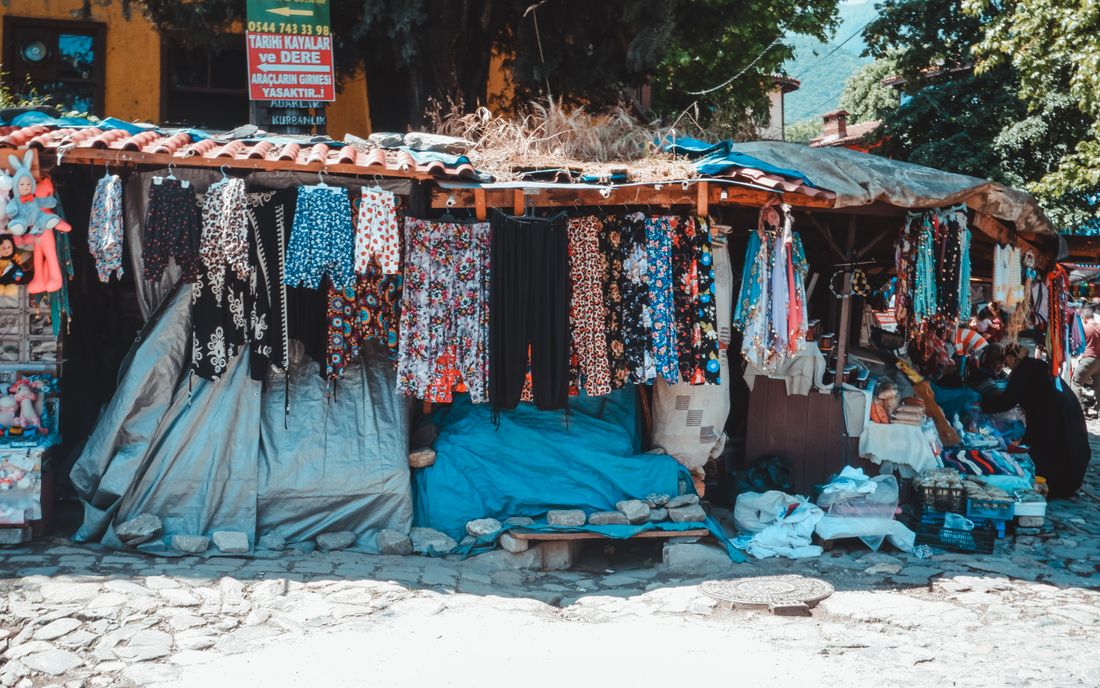
Recording goods bought at the bazaar without an invoice
Goods bought at a wholesale bazaar without paperwork should not drop out of your records: your own purchase sheet and three simple rules are enough.
Many small shopkeepers do their own buying. In the morning you go to the wholesale bazaar, pay cash, the seller says "no receipt, I will write one next time", and you load the goods into the car and head back. The prices stay only in your memory. By evening you cannot say exactly what each item cost you, and the next day you forget altogether. Even with no paper document you must keep a purchase record: without it you can work out neither profit nor a sensible price.
This article is not about tax rules; for those, talk to an accountant or a tax adviser. It is about your own internal records, which you need in any case.
What goes missing without documents
With a delivery note, the price and quantity are on paper. At the bazaar there is no paper, so three things drop out of your records:
- Cost. If you do not know what an item cost, you set the selling price by eye and may sell at a loss.
- Receipts. If goods never reach the table, the balance looks lower than it is, and later the goods you do have turn out to be "surplus".
- Money. The cash you took to the bazaar becomes impossible to trace afterwards.
Bazaar prices change from day to day, so it is natural for yesterday's and today's price of one item to differ. That is exactly why each purchase should be written down with its date.
Your own purchase sheet
A simple sheet that you draw up yourself can stand in for the official document. It can be a notebook, Excel or a note on your phone. The columns are:
- date;
- seller (name, row or stall number, phone);
- item name;
- quantity and unit (pieces, boxes, kg);
- price per unit;
- total amount;
- method of payment (cash or transfer).
A sample row (figures are illustrative): "Monday | Karim, row 3 | washing powder, 3 kg | 20 boxes | 96,000 so'm | 1,920,000 so'm | cash". At a glance you can see what was bought, from whom, how much and at what price.
Write at the stall or leave yourself a voice message, for example in the "Saved messages" section of Telegram. The plan "I will write it from memory this evening" almost never works. If you photograph the pile of goods and the paper with the price, doubts are fewer later on.
Three rules
The first rule is to write on the spot, before you leave the bazaar. The second is to check the total against the cash. An illustrative example: you arrived at the bazaar with 2,000,000 so'm and left with 600,000. So 1,400,000 so'm was spent, and the total on your sheet must be the same. If it comes to 1,250,000, then 150,000 so'm is unrecorded, and right now it is easiest to remember. The third rule is to always write the unit. The entry "tea, 10" could mean 10 pieces or 10 boxes, and the difference in price is huge.
Once you are back at the shop
The same day, copy the data from the sheet into the main table: the goods are booked in and the price per unit becomes the cost. If you bought the same item from different sellers at different prices, work out the average. An illustrative example: 100 pieces bought at 5,000 so'm and 50 pieces at 5,600 so'm. Total spend is 500,000 + 280,000 = 780,000 so'm, so the average price for 150 pieces is 5,200 so'm. That is the figure from which you set the selling price, without forgetting the cost of transport and unloading.
Before you go to the bazaar
Two more habits make recording easier. The first is to go with a list: which items you need, how many to buy and what the balance is. People who go without a list often buy too much and freeze their cash. The second is to keep a list of regular sellers, with each one's name, phone and latest prices. Then you quickly notice that a price has risen or a seller has changed, and when you bargain you rely on exact figures.
Conclusion
No document does not mean no records. One simple sheet, writing on the spot and checking the total against cash bring every item bought at the bazaar back into your records. If a few months of purchases without documents have tangled your balances and prices, the AniqHisob team can run a stock count, establish the real balances and help restore your records.